Written by Janice Hunt.
15 July 2026
Reading time: 1,8 minutes
Be the thought leader you want to read
Leading others’ thoughts – that’s quite a big responsibility and it’s not to be taken lightly. Your thought leading – through articles and blogs in the media and on other platforms – says much about you and your organisation and what you stand for, so every instance should be given careful consideration.
What is good thought leadership?
Thought leadership articles, not to be confused with op-eds that aim to persuade people on specific, timely debates, aim to introduce new frameworks, educate an industry and reposition complex problems.
In an excellent blog titled, ‘We need to talk about thought leadership,’ writer Mandy Collins of Red Door Ink, explains what good thought leadership looks like: “Well, the clue’s in the name. I think a true thought leader needs to be an expert in their field and industry. In fact, I’d go so far as to say, preferably they need to be the expert. And if they aren’t, they need to have such a good grasp of their industry, so much deep insight and insider knowledge, that they can make us think about current trends, issues and challenges in an entirely new way, and persuade us by the end of the piece that they are, in fact the pre-eminent expert, and have just knocked someone else off that perch before our very eyes.”
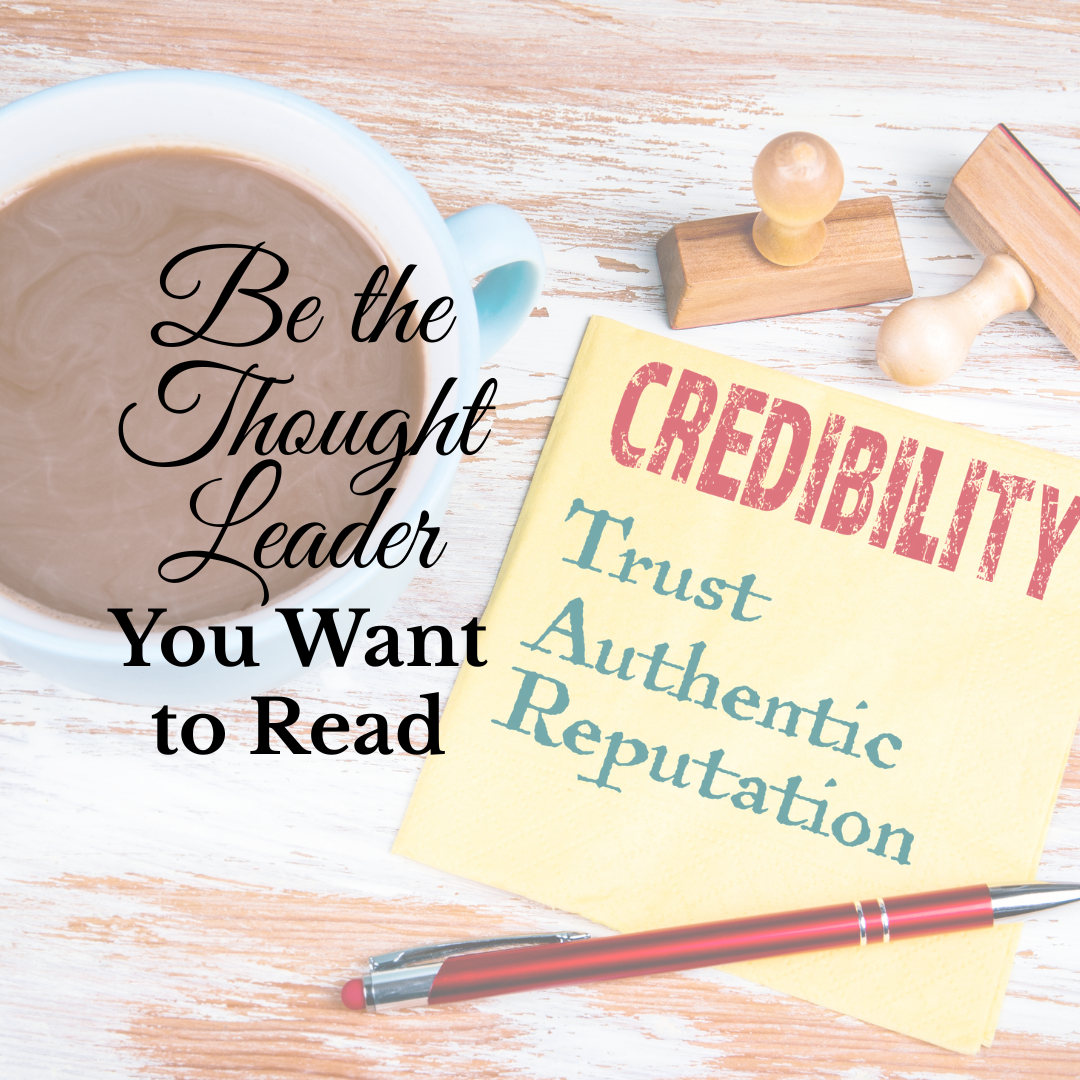
So good thought leadership is credible in a world where credibility matters more than ever, and organisations that consistently share valuable insights position themselves as trusted partners and industry leaders. It offers informed commentary, practical advice and industry insights that add value to the sector. It can extend the reach of the thought leader and your organisation, having a positive impact on the industry and encouraging ongoing engagement.
Effective thought leadership is the difference between saying ‘look at us’ and having your audience say, ‘tell us more’ (and looking at you to boot).
LinkedIn-Edelman Report
According to the 2021 LinkedIn-Edelman B2B Thought Leadership Impact Report (conducted mid-pandemic), they found that 66% of global decision-makers said the pandemic led to a huge increase in the amount of thought leadership in the marketplace and over 50% of C-level executives said they spent more time reading thought leadership than before the pandemic. But while consumption was up, satisfaction was not – 71% of decision-makers said that half or less than half of the thought-leadership content they read or watched gave them any sort of valuable insights.
What works?
According to LinkedIn-Edelmann’s survey, notable preferences that emerged are that:
- 87% said thought-leadership content can be both intellectually rigorous and fun to consume.
- 81% wanted provocative insights that challenge their assumptions rather than validate their current thinking.
- 80% of decision-makers want thought leadership that includes third-party data from trusted sources rather than only insights from the company.
- 77% are interested in hearing from deep subject matter experts delving into specialised topics over senior executives addressing high-level business issues.
- 64% of decision-makers prefer a more human, less formal tone of voice rather than an intellectual voice.
What it’s not
This brings us to a quick review of what good thought leadership is not: a sales pitch that promotes your organisation’s achievements, services or products; a repeat of what others are saying; bland and generic content that says little because you’re too concerned about offending readers or even stakeholders; a focus on your organisation and not on your readership or sector; opinionated without research or data to back your opinions; and highly technical or jargon-laden content that does not incorporate the human element; or no clarity on why the topic matters and how it affects the sector.
Why it works
Having said all that, the fact is that good thought leadership works and there’s a reason that it is a key part of businesses’ strategic communication and marketing plans, from small to large and across the country. As an effective tool, it builds trust, establishes authority, differentiates your brand and creates meaningful connections with audiences. When thought leaders focus on expertise, relevance and authenticity, thought leadership becomes a powerful tool for building brand reputation and business credibility.
Ask yourself, ‘What valuable insight can we share that helps our stakeholders better understand our collective world?’ And remember that one swallow doesn’t make a summer. A single article is unlikely to establish you as an industry authority – thought leadership builds authority over time through consistent visibility and engagement.
Take to heart, this fine thought from entrepreneur Keith Ferrazzi, “The currency of real networking is not greed but generosity.”