
Written by Ann Baker-Keulemans
27 May 2026
Reading time: 1,8 minutes
Why are real writers flagged as AI?
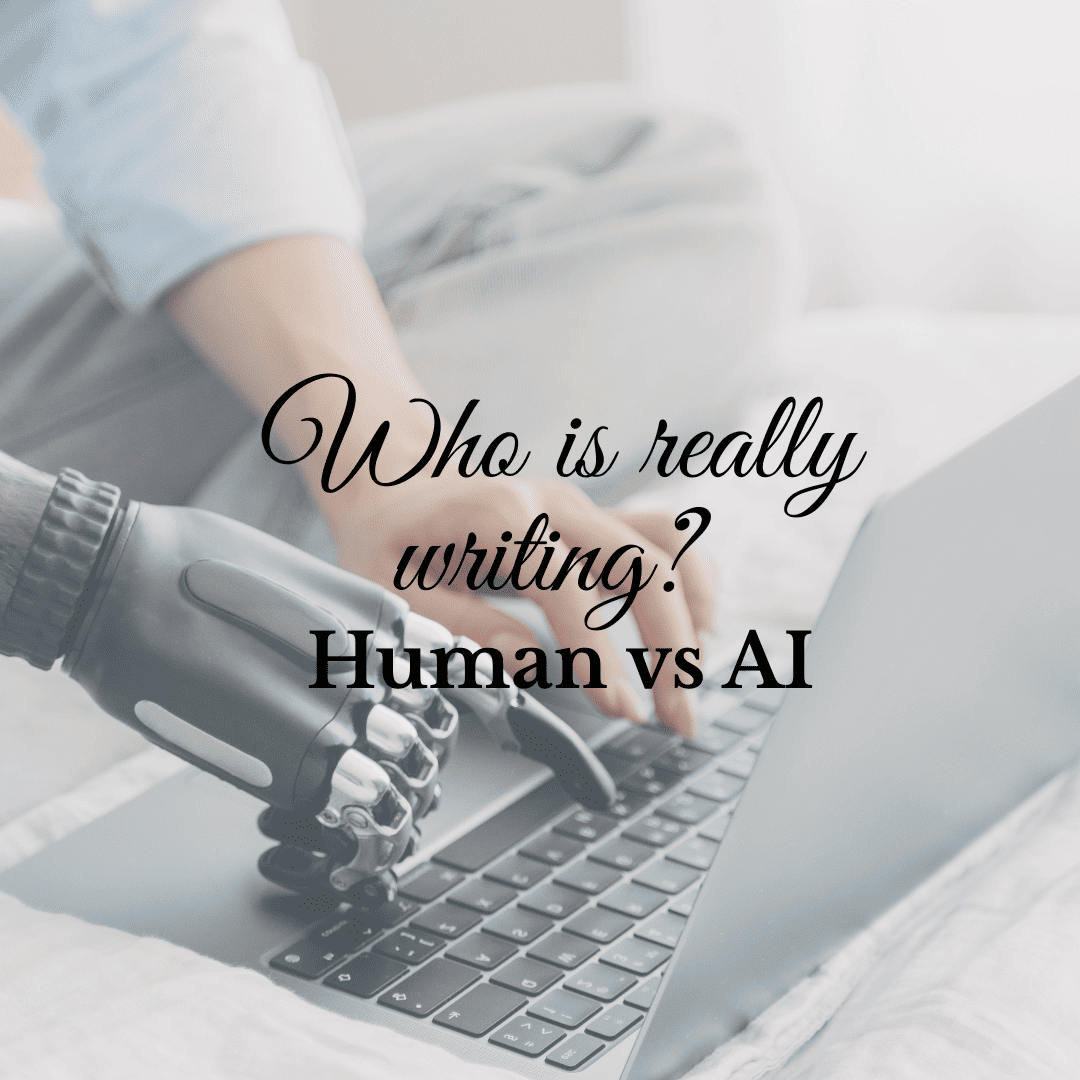
When an article is flagged as being AI, it’s more than just a bit annoying for the writer. It is a threat to a career that requires natural ability, skill, education and years of experience. A human tool, refined and perfected through hard work, study and constant improvement, is being told it’s ‘too good to be human’ by an artificial intelligence that was, ironically, trained using the work of the very humans it is now flagging as ‘not-human’.
Excuse me while I find my soapbox …
We need to understand that the software that purports to detect AI writing does not detect humanity; it simply detects those traits that make writing good. IT spots patterns. Clarity, sentence structure and complexity, grammar, a formal or business tone, SEO phrases, certain formulaic structures required of academic or professional writing and a lack of personal flavour are all triggers that AI detectors look for. The problem is that’s exactly what professional writers and editors strive to create and excel at doing. They’re so good at it, in fact, that AI thinks they’re faking it.
Interestingly, AI-detecting software often comes with ‘humanising’ software – a bit of a conflict of interest, no? After the software decides the writer isn’t human, it then offers to ‘humanise’ the writing, for a fee of course, in a move so hypocritical it’s actually mind-boggling. Using AI to make anything ‘more human’ doesn’t make sense.
And how does it make writing more human? It uses shorter sentences, removes handy grammatical tools and punctuation marks, adds more variability, and turns a well-crafted piece of writing into something that makes good editors weep and good writers seriously considering throwing in the towel.
Writers are being left paralysed with fear. If they do a good job, the job they were trained to do, they’ll be flagged as AI. If they dumb it down enough to pass as human, the quality of the work they have produced is decidedly inferior. It’s a no-win situation.
And for what? AI detectors are notoriously inconsistent and demonstrably unreliable. The University of San Diego set out a guide for instructors on the use of generative AI detectors and noted this specifically. There’s the issue of training data overlap, overly sensitive detectors straining to keep up with increasingly sophisticated language models and everyone running their text through detectors “just to check”. Szymon Machajewski calls it a model collapse – medical texts written years before AI existed are being flagged as 100% AI-generated, an impossibility, of course, and every time human-generated text is run through AI detectors using a web dashboard, that text remains as part of the model, adding to that feedback loop.
Blogs offering advice suggest varying sentence length, using a more conversational tone, writing ‘messier’, and a whole host of infuriating suggestions that don’t sit well with professional writers. The truth is, as with any other AI product, there needs to be a human driver, and that driver needs to be able to ascertain whether something was written by a human or by AI by using more than detection software.
So my advice is this – be prepared to defend your writing. Offer to make changes on the spot or send proof of progression – if you’re anything like most writers I know, a Word document with tracked changes should be enough to convince an actual human that you did, in fact, do all the writing yourself. And don’t give up hope. After all, Terminator was just a movie. Right?