Written by Janice Hunt
19 May 2026
Reading time: 1,8 minutes
Mind the expectation gap
“This is not what I expected.” Now that’s a phrase that’s likely to carry a negative tone, even disappointment and, whether thought or spoken, occurs all too often in the course of a working day.
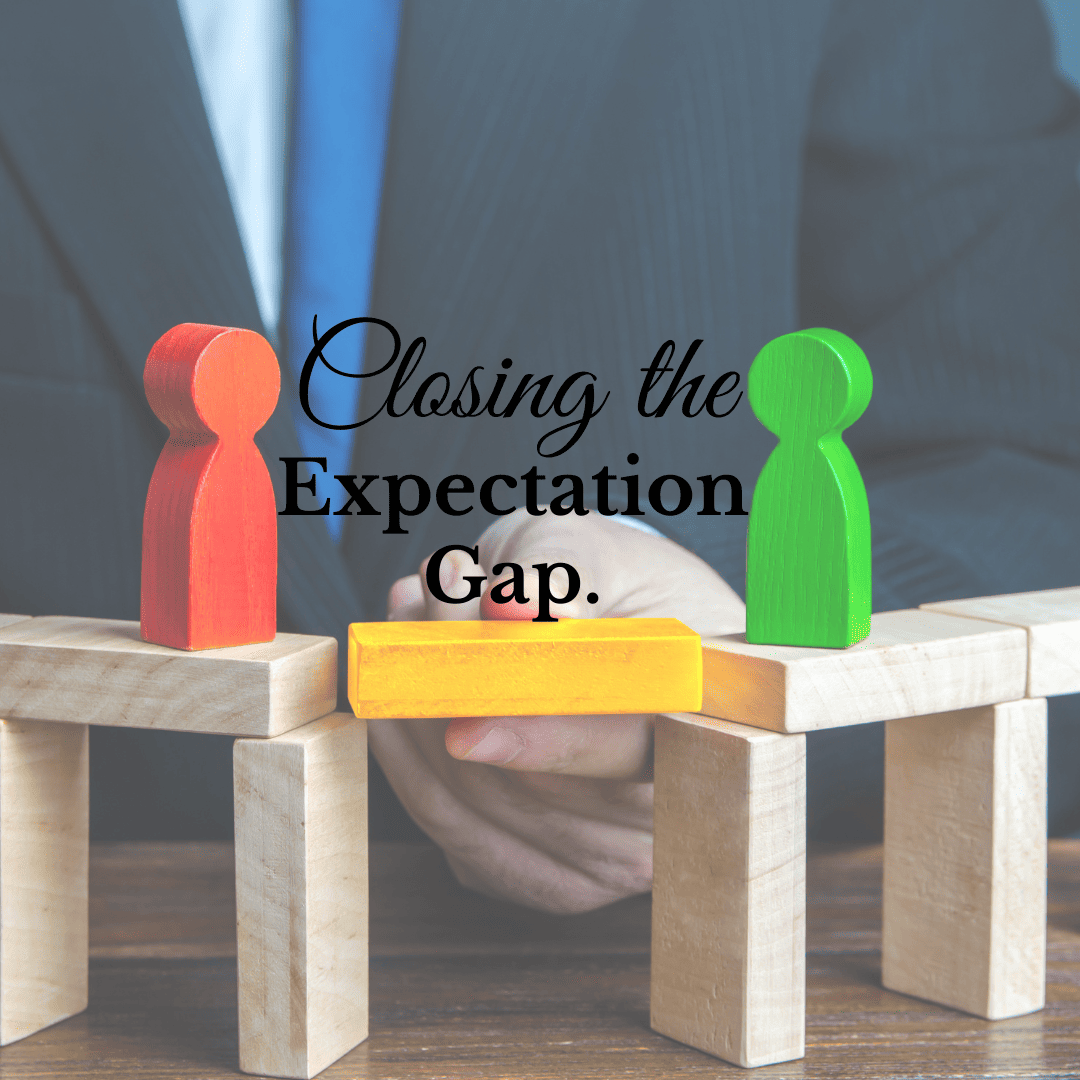
Expectation gaps are constant proof that mind-reading remains an underdeveloped skill in any and every workplace environment. They’re the spaces (and sometimes chasms) between what we mean, what we said, what is heard … and what is done.
Expectation gaps in any relational setting, whether in the workplace or in the normal run of day-to-day activities, are likely to cause disruptions. And even though the concept of these gaps and their repercussions is common knowledge, they slip into daily life again and again.
But it’s possible to reduce their likelihood and the fallout they can cause by giving a bit of extra attention on a regular basis to the circumstances that may lead to them. A reminder, as it were, to avoid misunderstandings that can so readily occur when the pressure is on and assumptions are made in the heat of the moment.
Expectation gaps can fall into any number of categories, but three common ones in the workplace relate to performance, communication and reward.
A report is due and the expectation is for a high-level strategic report but a basic data summary is delivered. A deadline is interpreted as flexible by the team but the leader intended it to be firm. Employees expect a raise, promotion or bonus based on performance but it’s not forthcoming for various financial reasons.
And there are many other possible scenarios.
The fact is that each of these situations cost time, money and other resources. They are also likely to erode trust and confidence and can lead to resentment and compromised productivity. Importantly, they could all quite easily be avoided.
Eliminating expectation gaps from a work environment can be achieved in various ways, including:
- Avoiding ‘weasel’ words, which Oxford defines as “words or statements that are intentionally ambiguous or misleading”. Think of words such as ‘asap’, ‘high quality’ or ‘appropriate’ – or other phrases that mean different things to different people. Being specific and making sure that employees understand the requirements and are comfortable about achieving them can ensure that the outcome is exactly what is expected.
- Avoiding the ‘assumed knowledge’ trap. Leaders with lots of training and experience may assume that colleagues or junior staff members understand things at the same level. That’s often unrealistic and can lead to misunderstanding. Patience and clarity of communication can prevent these frustrations.
- Avoiding conflict avoidance. Yes, conflict avoidance is generally desirable in a workplace. But when teams or individuals agree to unrealistic demands and expectations to dodge difficult conversations, gaps are created – and are likely to widen over time. Taking a step back and making sure that goals are achievable will prevent this.
- Avoiding shifting goalposts. Although flexibility is a key requirement in most workplaces, constantly moving the goalposts leads to stress, which in turn reduces productivity and all that entails.
The key word in managing expectations is always communication. Discuss responsibilities and expected outcomes to make sure that everyone understands. Document expectations. Use project trackers to make sure teams and individuals deliver according to schedule. Check in regularly, review progress, provide feedback and adjust expectations as needed. Share updates and other relevant information with team members and with upper management to manage expectations at all levels.
Clear expectations may not guarantee perfection, but they will make success far more likely.